

Attending a conference on building new markets made me ask why existing systems are so difficult to change, and what this means for those trying to build new ones.
I recently returned from the Shifting the System conference at Wageningen University, which focused on shaping markets for sustainability. The trip ended up raising a very different set of questions from the ones I had expected to explore.
Market shaping refers to efforts by companies, governments and other actors to create new markets and steer economic development in a desired direction. In sustainability transitions, this often means transforming entire energy, transport, materials or food systems, and finding ways to make new solutions economically viable.
I had therefore expected discussions about how to create demand for sustainable technologies and remove barriers to their adoption. Those questions were certainly addressed, but one presentation stayed with me, and I found myself returning to it on the journey home. Eventually, the entire conference began to reorganise itself in my mind around a different question: why are existing systems so difficult to change, even when new solutions already exist?
The invisible legal layer
Recently, I have been reading the work of the legal scholar Katharina Pistor. Her best-known argument is that capital is not merely an economic phenomenon. Instead, it is created when the legal system grants certain assets particular rights, protections and privileges.
Before the conference, I had been thinking about this in the context of the hydrogen economy. If the hydrogen economy expands, it will bring with it pipelines, terminals, access rights and supply contracts — new forms of capital. But after the conference, I found myself approaching the question from the opposite direction. Pistor could be more useful for understanding the existing fossil economy than the future hydrogen economy.
Oil fields, refineries, petrochemical plants and fertiliser factories are not merely technical systems. Over decades, vast amounts of asset value, contractual arrangements and expectations of future returns have accumulated around them. When we talk about the energy transition, for example, we are not confronting just technology: we are confronting legally protected capital. Suddenly, it became easier to understand why the fossil economy does not disappear at the same pace as clean technologies develop.
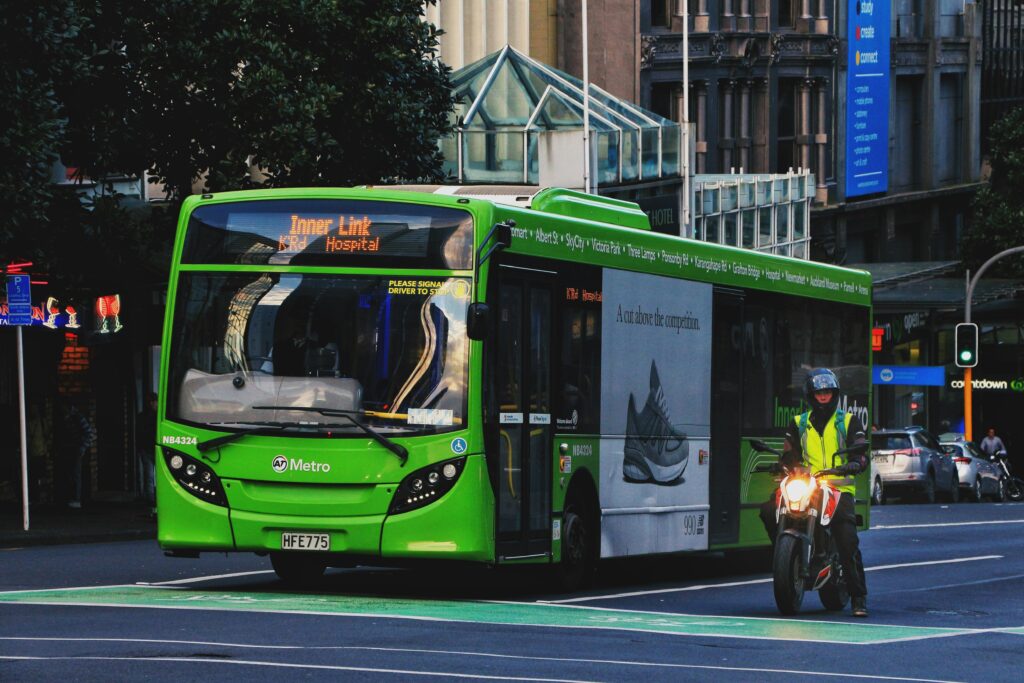
São Paulo’s buses
Pistor’s argument brought me back to the Multi-Level Perspective developed by Frank Geels. It reminds us that societal systems consist of much more than technologies. They also include infrastructure, institutions, business models, regulation and routines. This can sound rather abstract, but a Brazilian case presented at the Wageningen conference made it very concrete.
In 2018, São Paulo launched Latin America’s largest electric bus programme. The aim was to electrify the city’s public transport system, which serves more than three million passengers every day. By 2025, the city had nearly 800 electric buses in operation, seven electrified depots and more than USD 500 million in financing.
Behind these numbers lies a long struggle. Researchers Mauricio Gayubas and Marcelo Luiz Dias da Silva Gabriel identified 47 instances of resistance from the incumbent diesel system between 2018 and 2025. These included legal challenges to the ban on purchasing diesel buses, arguments that electrification was economically unviable and operationally risky, delays in charging infrastructure that were used to justify continued diesel procurement, and the weakening of targets and timelines during the legislative process. As a result, more than a thousand new diesel buses entered service even after the official procurement ban had taken effect.
This is less surprising once we remember the legal layer and everything that had become embedded in the existing system. The diesel system was surrounded by contracts, financing arrangements, depots, maintenance networks and established operating practices. Market shaping should therefore not focus solely on building new solutions. It is equally important to understand where the pressure points of the existing system lie.
Continuity transition or disruptive transition?
The conference keynote speaker John Elkington also raised an idea that stayed with me: major transitions often take place only when incumbent actors find a new business model within them. Many transitions do seem to proceed in this way. Energy companies move into renewables, and industrial companies adopt new raw materials. The technology changes, but the key actors remain.
Then a counter-question occurred to me. What about NVIDIA, Netflix or Oura? They did not become central actors in a new system because the incumbents transformed themselves. They themselves took over the role of system operator.
This made me realise that it may be useful to distinguish between two types of transition. In continuity transitions, the system changes but the key actors remain. In disruptive transitions, the actors change as well. The familiar distinction between incremental and radical innovation tells us little about this difference, because a continuity transition can be technologically very radical. The crucial question is: who operates the system after the transition?
Acceptance as a resource
One further insight concerned acceptance. A well known framework in renewable energy research is Wüstenhagen, Wolsink and Bürer’s distinction between community acceptance, market acceptance and socio-political acceptance. For a long time, I had thought of acceptance primarily as something to be measured but the São Paulo case suggested another way of looking at it.
What if acceptance is not merely something to measure, but a resource whose definition is itself contested? When opponents of electric buses framed electrification as economically unviable and operationally risky, they were competing over what would be perceived as realistic and responsible. Concepts such as responsibility, realism, safety and fairness do not have a single fixed meaning. The same concept can, under one framing, demand faster change and, under another, justify slowing it down.
At the same time, it is important to avoid the opposite extreme. Not everything is semantics. A system may remain politically accepted and commercially successful for a long time while eventually proving ecologically or socially unsustainable. Not everything that is accepted is sustainable, and not everything that is sustainable is automatically accepted. Much of the struggle surrounding today’s transitions takes place in the space between the two.
What could market shaping learn from this?
Sustainability transitions are difficult because the existing system is not simply a collection of technologies. It consists of rights, infrastructure, established practices and meanings that have become intertwined over time.
Lock-in and resistance are as much a part of transitions as new solutions are. Market shaping should therefore ask more often: what system is the change embedded in, and what infrastructure, practices, rights and asset values have been built around it? Is this a continuity transition or a disruptive transition? What forms of resistance are likely to emerge? What kinds of language and narratives can build support for change?
Market shaping also involves legal innovation: the contracts, standards and operating practices required for new value chains. One example is CO2RR (Carbon Rhine Route), a project funded by CETPartnership that is developing one of Europe’s first commercial cross-border CCS value chains. The project uses already validated technology, while much of its innovation lies in framework agreements, risk-sharing mechanisms and incentives. Contract templates are being collected in an open knowledge repository so that subsequent value chains will not have to start from scratch. In other words, the legal layer of a new system can be deliberately designed to lower the barriers for those who follow.
The fossil economy was built over decades into infrastructures, routines and rights. The equivalents for new value chains are being constructed now, and at the same time we need to determine how to disengage from the old system in a managed way. Building the new and dismantling the old are two sides of the same transition.
Tanja Suni (PhD), Head of System Transitions and Impact at CLIC Innovation, is responsible for impact and leads market-shaping activities for the Clean Energy Transition Partnership (CETPartnership). The CO2RR project mentioned in this article will present its results at the FOAK Forum on 29 October 2026. The forum is the fourth market-shaping event organised for CETPartnership by CLIC experts.
For more information

Tanja Suni
Head of System Transition and Impact
Tel. +358 50 501 2711
tanja.suni(at)clicinnovation.fi
References
Pistor, K. (2019). The Code of Capital: How the Law Creates Wealth and Inequality.
Geels, F.W. (2002). Technological transitions as evolutionary reconfiguration processes. Research Policy.
Geels, F.W. (2011). The multi-level perspective on sustainability transitions. Environmental Innovation and Societal Transitions.
Wüstenhagen, R., Wolsink, M. & Bürer, M.J. (2007). Social Acceptance of Renewable Energy Innovation. Energy Policy.
Gayubas, M. & Dias da Silva Gabriel, M.L. (2026). Shaping Wars: Public-Led Market Making and Regime Resistance in São Paulo’s Electric Bus Transition. Conference presentation, Shifting the System: Market Innovation for Sustainability Transitions, Wageningen University, 27–29 May 2026.
Elkington, J. (2026). Keynote presentation, Shifting the System: Market Innovation for Sustainability Transitions, Wageningen University, 27–29 May 2026.
CO2RR – Carbon Rhine Route. CETPartnership project, Joint Call 2022.