Finland’s bioeconomy has strong potential in biomaterials, biochemicals, side stream utilisation, digitalisation, and sustainable value chains. At the CLIC Bioeconomy Thematic Group Meeting, experts from the Finnish Environment Institute (SYKE) and Business Finland highlighted how sustainability expertise, regulatory understanding, and renewed funding models can help turn this potential into impact.
Background
The second CLIC Bioeconomy Thematic Group Meeting held on 13th May brought together Finnish companies, research organisations, and innovation actors to discuss how Finland’s bioeconomy can renew itself and strengthen competitiveness. The message was clear: opportunities are growing, but so is the need for more focused collaboration. Future success will depend on connecting sustainability knowledge, business needs, funding instruments, digital tools, and regulatory realities from the beginning of project development.
Sustainability expertise as a driver of bioeconomy innovation
In her keynote, Senior Research Scientist Johanna Niemistö from the Finnish Environment Institute (SYKE) presented SYKE’s activities and collaboration opportunities. SYKE is a governmental research institute under the Ministry of the Environment and the Ministry of Agriculture and Forestry, with around 700 employees and a budget of approximately €77 million. Its work spans climate solutions, circular economy, the built environment, nature, and marine and freshwater solutions.
For bioeconomy actors, SYKE offers expertise that is increasingly central to market success: sustainability assessments, life cycle assessments, ecological product design, scenario analysis, sustainable business models, and regulatory analysis. These capabilities help companies and research consortia understand not only whether a solution works technically, but whether it is environmentally sound, commercially viable, and aligned with regulation in both Finnish and international contexts.
Business Finland’s strategy creates an opening for bioeconomy
Senior Director Jarmo Heinonen from Business Finland presented the organisation’s renewed strategy, thematic priorities, and funding direction related to the bioeconomy transition. The strategy focuses on increasing productivity-enhancing private R&D investment, encouraging ambitious innovation collaboration, strengthening national areas of excellence, and improving transparency and impact.
Business Finland’s thematic choices include digital pioneering, security, clean transition, good life, and business competence. Biomaterials and biochemicals are included under the “good life” theme, creating a promising opening for future bioeconomy initiatives. Heinonen explained that Business Finland is moving toward more agile, partner-driven programmes, typically lasting around two years and evaluated periodically. A significant share of R&D funding is expected to be channeled through these thematic growth areas.
For the bioeconomy community, this creates both momentum and a challenge. Agile programmes can help launch new interdisciplinary initiatives faster, but bioeconomy innovation often requires long development timelines, from low-TRL research to piloting, scale-up, and market entry. Future funding models must therefore be flexible enough to support staged commitment, longer value-chain development, and company participation at different phases.
Heinonen also highlighted Nordic and European collaboration, including the IIPPO funding initiative with Germany and Estonia and growing cooperation with Nordic funding agencies. This broader collaboration can help strengthen industrial value chains and improve Finland’s position in a changing geopolitical environment.
Current bottlenecks in creating collaborative projects
The Bioeconomy Thematic Group then discussed how to turn strategic priorities into concrete bioeconomy projects. Participants identified recurring bottlenecks: slow project preparation, rigid funding instruments, regulatory constraints, gaps between scientific disciplines, limited company-led R&D investment, and the difficulty of engaging SMEs.
Although Finland has strong research expertise in side stream utilisation, regulation and commercialisation pathways were seen to often slow down product development. Participants called for more practical dialogue with Business Finland so that real project barriers can be reflected in programme design. Further, the group stressed that strong company commitment remains essential.
Making collaboration more efficient
The Thematic Event showed that Finland has many of the ingredients needed for bioeconomy renewal: strong sustainability expertise, advanced research capabilities, active companies, renewed funding priorities, and a collaborative ecosystem. The next step is to strengthen early industry-research dialogue, bring company needs into project formation faster, and create more flexible pathways from research to commercial impact.
Interested in future CLIC Bioeconomy activities? Join the ecosystem discussions and help shape new collaboration opportunities for sustainable industrial renewal.
For more information
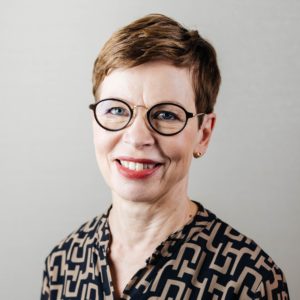
Aila Maijanen
Head of Bioeconomy, currently also Executive Officer for IBC Finland ry
Tel. +358 50 375 1182
aila.maijanen(at)clicinnovation.fi